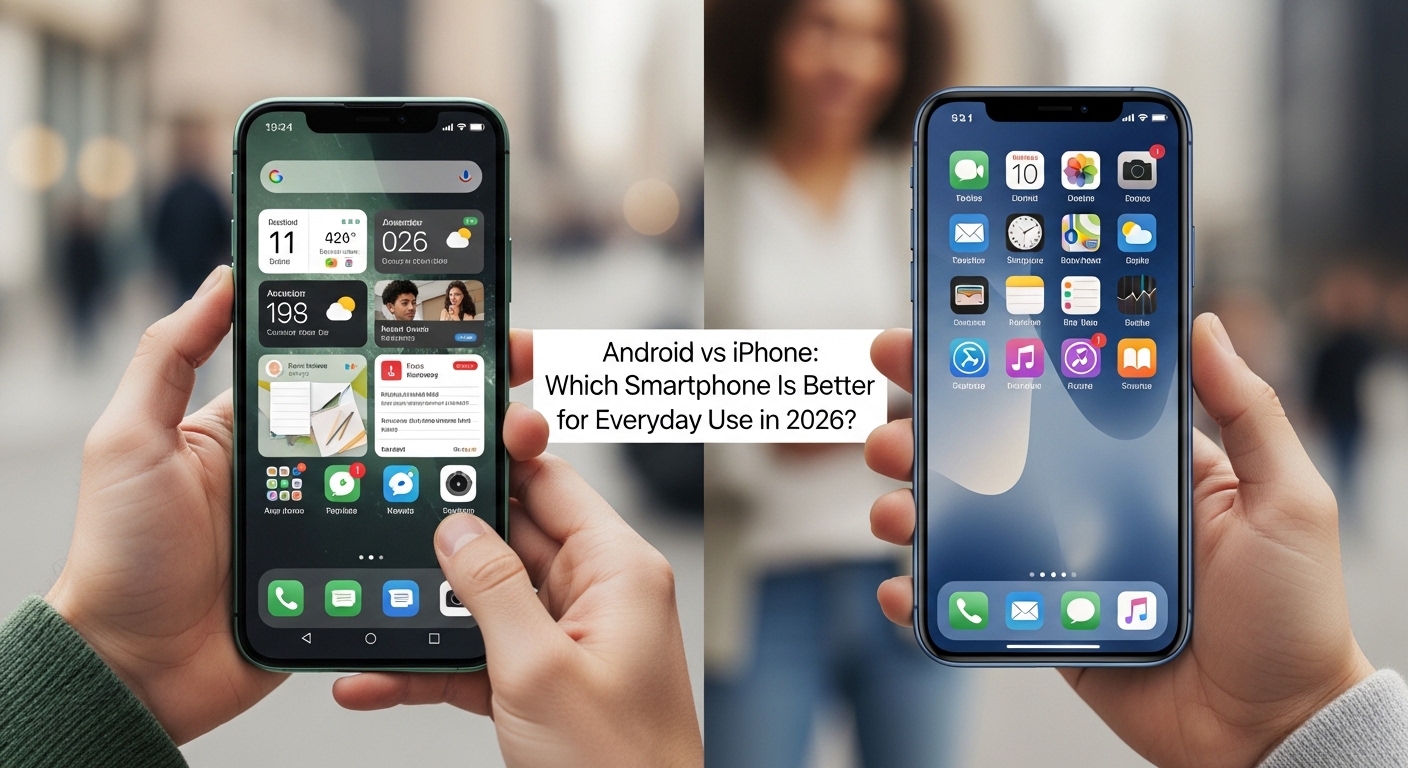
In 2026, the smartphone market is more advanced than ever before. Both Android and iPhone have reached a level of maturity where they offer powerful performance, AI-driven features, high-quality cameras, and long software support. However, the debate is still alive: Android vs iPhone — which one is better for everyday use?
Understanding the Core Difference Between Android and iPhone
Before comparing features, it’s important to understand the basic philosophy of both platforms.
iPhone (iOS 26 in 2026)
- Controlled by Apple (hardware + software together)
- Focus on simplicity, security, and smooth performance
- Limited models but highly optimized experience
Android (Android 16 in 2026)
- Used by multiple brands (Samsung, Google, OnePlus, etc.)
- Focus on customization, flexibility, and variety
- Huge range of devices from budget to ultra-premium
This difference shapes the entire user experience in daily life.
Everyday Performance and Speed
In daily use, both platforms are extremely fast in 2026. Apps open quickly, multitasking is smooth, and gaming performance is strong on flagship models.
iPhone Performance
- Extremely stable and optimized
- Smooth animations and consistent speed
- Excellent for long-term performance without lag
Android Performance
- High-end Android phones can match or even exceed iPhones in raw power
- Better multitasking options on many devices
- Performance varies depending on brand and price
👉 In simple words:
iPhone = consistency
Android = more power options
Battery Life and Charging Experience
Battery life is one of the most important factors for everyday users.
iPhone Advantages
- Strong battery optimization
- Reliable all-day performance
- Predictable battery usage
Android Advantages
- Larger battery sizes in many models
- Much faster charging (some phones fully charge in under 30 minutes)
- Better flexibility in power management
👉 If you hate waiting for charging → Android wins
👉 If you want stable battery behavior → iPhone wins
Customization vs Simplicity
This is where the biggest difference shows up in daily life.
Android Customization
- Change themes, icons, and layouts
- Install custom launchers
- More control over file system and apps
- Advanced users can fully personalize their phone
iPhone Simplicity
- Clean and uniform interface
- Easy to use with minimal setup
- Less freedom but fewer complications
👉 Android feels like “your phone”
👉 iPhone feels like “ready-to-use perfection”
Camera Experience in Daily Use
In 2026, both Android and iPhone cameras are excellent, especially in flagship devices.
iPhone Cameras
- Very consistent photo and video quality
- Best for social media videos
- Natural color accuracy
Android Cameras
- More variety in camera styles
- Some phones offer zoom, AI editing, and creative features
- Strong innovation in photography tools
👉 Content creators often prefer iPhone for video
👉 Photography enthusiasts enjoy Android variety
Software Updates and Long-Term Use
Software support is important for everyday reliability.
iPhone Updates
- Long-term updates (often 5–6 years)
- Updates released at the same time for all devices
- Very stable update experience
Android Updates
- Depends on brand (Google Pixel and Samsung lead here)
- Many flagship phones now offer 4–7 years of updates
- Budget phones get fewer updates
👉 iPhone still leads in consistency
👉 Android is improving rapidly in long-term support
Ecosystem and Daily Convenience
Your smartphone is no longer a standalone device — it connects to your laptop, watch, and other gadgets.
Apple Ecosystem (iPhone)
- Seamless connection with Mac, iPad, Apple Watch
- AirDrop, iMessage, FaceTime integration
- Everything works smoothly together
Android Ecosystem
- Works with Windows PCs, Google services, smart devices
- More flexible but less tightly integrated
- Strong Google ecosystem support
👉 If you use multiple Apple devices → iPhone is unbeatable
👉 If you prefer flexibility → Android is better
Privacy and Security
Security is a major concern in 2026.
iPhone Security
- Strong privacy controls
- App tracking restrictions
- Highly secure ecosystem
Android Security
- Improved security with Google updates
- More control over apps and permissions
- Slightly more exposure due to open system
👉 iPhone is generally considered more secure out of the box
Price and Value for Money
iPhone
- Expensive but holds resale value
- Premium pricing across all models
Android
- Huge price range (budget to flagship)
- Better value in mid-range segment
- More choices for every budget
👉 Android wins in affordability
👉 iPhone wins in resale value
Final Verdict: Which One Is Better in 2026?
The answer depends on your daily needs:
Choose iPhone if you want:
- Simple and smooth experience
- Strong privacy and security
- Long software updates
- Best ecosystem integration
Choose Android if you want:
- More customization and control
- Better variety of devices
- Faster charging and flexible hardware
- Better value for money
Conclusion
In 2026, there is no “perfect” smartphone for everyone. Both Android and iPhone are powerful, modern, and highly capable. The real difference lies in how you use your phone every day.
If you want simplicity and stability, iPhone is the better choice. If you want freedom and variety, Android is the winner. Ultimately, the best smartphone is the one that fits your lifestyle — not just the one with the highest specs.