In today’s competitive business environment, small businesses are constantly looking for ways to improve efficiency while keeping costs under control. One of the most effective tools available today is Artificial Intelligence (AI). Once considered a technology only large corporations could afford, AI has now become accessible to businesses of every size. From automating repetitive tasks to improving customer service, AI can help small businesses save time, reduce errors, and increase overall productivity.
Understanding how small businesses can use artificial intelligence to increase productivity can give owners a valuable advantage in a crowded market.
What Is Artificial Intelligence in Business?
Artificial Intelligence refers to computer systems that can perform tasks that normally require human intelligence. These tasks include:
- Data analysis
- Customer communication
- Predicting trends
- Automating workflows
- Personalizing marketing
For small businesses, AI tools can simplify daily operations and allow owners to focus more on growth and strategy instead of routine work.
Automating Repetitive Tasks
One of the biggest ways AI increases productivity is through automation. Small business owners often spend hours on repetitive administrative tasks that can easily be handled by AI-powered software.
Common tasks AI can automate include:
- Scheduling appointments
- Sending invoices
- Inventory management
- Email responses
- Payroll processing
For example, AI accounting software can categorize expenses automatically and generate financial reports in minutes. This reduces manual work and minimizes human errors.
By automating routine tasks, employees can spend more time on activities that generate revenue.
Improving Customer Support with AI Chatbots
Customer service is essential for any small business, but hiring a full support team can be expensive. AI-powered chatbots can handle customer inquiries 24/7 without requiring additional staff.
Benefits of AI chatbots include:
- Instant responses to customers
- Reduced waiting times
- Handling multiple customers at once
- Lower support costs
- Better customer satisfaction
Chatbots can answer common questions such as:
- Business hours
- Pricing
- Order tracking
- Product recommendations
This allows human staff to focus on more complex customer issues.
Enhancing Marketing Campaigns
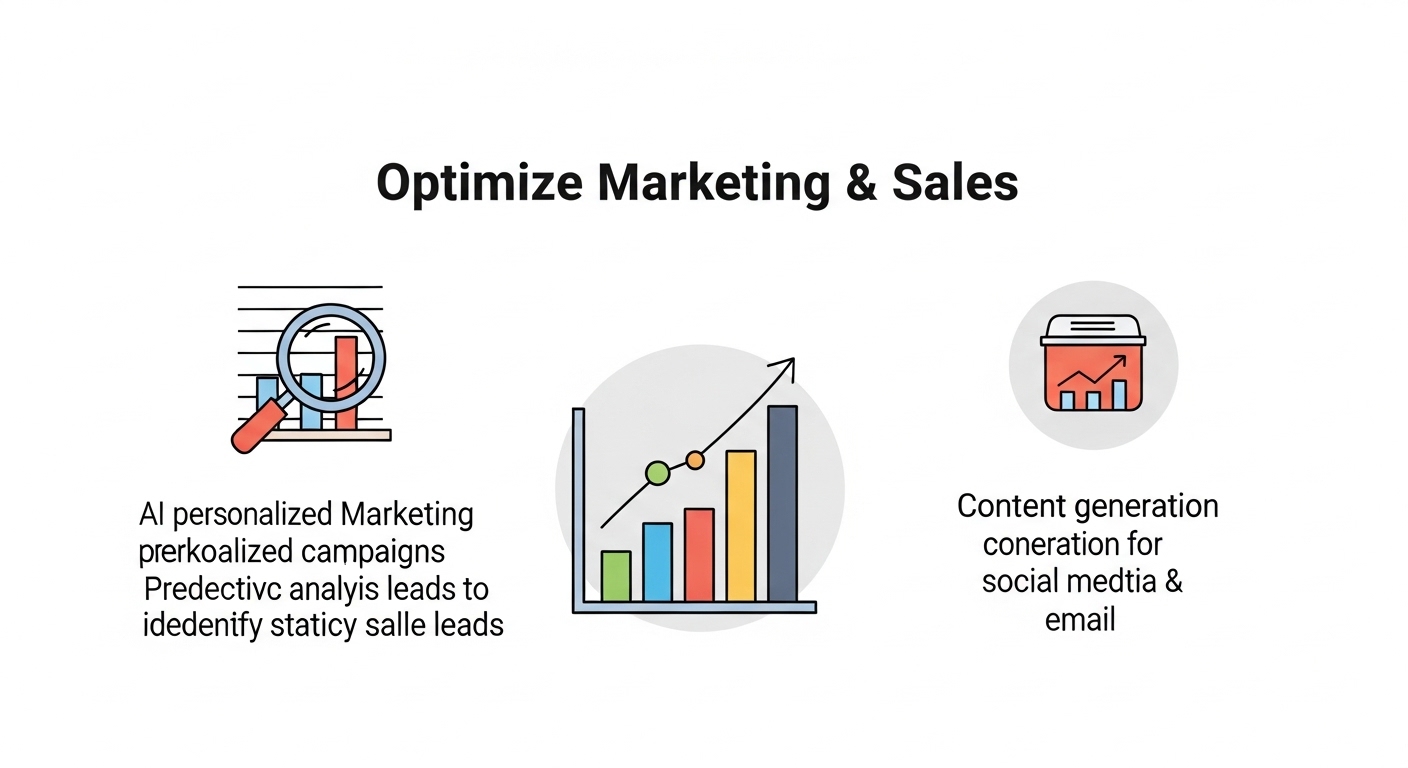
Marketing can be time-consuming for small business owners. AI tools can improve marketing performance by analyzing customer behavior and creating personalized campaigns.
AI can help with marketing by:
- Identifying target audiences
- Writing email subject lines
- Recommending social media content
- Predicting customer preferences
- Optimizing ad spending
AI marketing tools can study previous customer interactions and determine what type of content is most likely to convert into sales.
This means businesses can spend less money while getting better results from their marketing efforts.
Better Decision Making Through Data Analysis
Many small businesses collect data but struggle to understand it. AI can analyze large amounts of information quickly and provide actionable insights.
AI can analyze:
- Sales patterns
- Customer trends
- Inventory levels
- Website traffic
- Employee performance
Instead of guessing what customers want, business owners can use AI-generated insights to make smarter decisions.
For example, AI can identify which products sell best during certain seasons, helping businesses stock inventory more effectively.
Streamlining Inventory Management
Inventory management is often a challenge for small businesses. Too much inventory ties up cash, while too little inventory can lead to missed sales.
AI can help by predicting future demand based on:
- Historical sales
- Seasonal patterns
- Customer buying habits
- Market trends
With smarter inventory control, businesses can reduce waste and avoid overstocking while keeping popular items available.
This directly improves productivity by reducing manual inventory checks and improving operational efficiency.
Personalizing Customer Experiences
Modern customers expect personalized experiences. AI can help small businesses provide customized interactions that build loyalty.
AI personalization includes:
- Product recommendations
- Personalized emails
- Dynamic website content
- Customized promotions
When customers feel understood, they are more likely to return and make repeat purchases.
Even small businesses can now offer the type of personalization that was once only possible for large brands.
Improving Employee Productivity
AI does not replace employees—it helps them work smarter. By reducing manual work, AI allows staff to focus on creative and strategic responsibilities.
Examples include:
- AI writing assistants for content creation
- AI scheduling tools for team management
- AI transcription tools for meetings
- AI project management software
Employees can complete tasks faster while reducing stress and burnout.
This creates a more productive workplace overall.
Reducing Operational Costs
For many small businesses, controlling expenses is a top priority. AI can reduce costs by improving efficiency in multiple areas.
AI reduces costs through:
- Fewer manual errors
- Lower labor expenses
- Better resource allocation
- Reduced wasted inventory
- Faster task completion
Although some AI tools require an investment, the long-term savings often outweigh the initial cost.
Choosing the Right AI Tools for Small Business
Not every AI solution is suitable for every business. Small business owners should focus on tools that solve specific problems.
Popular AI tools include:
- AI chatbots for customer support
- AI accounting software
- AI marketing platforms
- AI scheduling assistants
- AI analytics dashboards
Before adopting any tool, businesses should evaluate:
- Ease of use
- Cost
- Integration with current systems
- Scalability
- Customer support
Starting small allows businesses to test AI without overwhelming their operations.
Final Thoughts
Artificial Intelligence is no longer just for large corporations. Small businesses can now use AI to automate tasks, improve customer service, enhance marketing, and make better decisions.
By understanding how small businesses can use artificial intelligence to increase productivity, owners can create more efficient operations while staying competitive in a fast-changing marketplace.
Businesses that embrace AI early may gain a significant advantage, saving time, reducing costs, and unlocking new opportunities for growth in the years ahead.