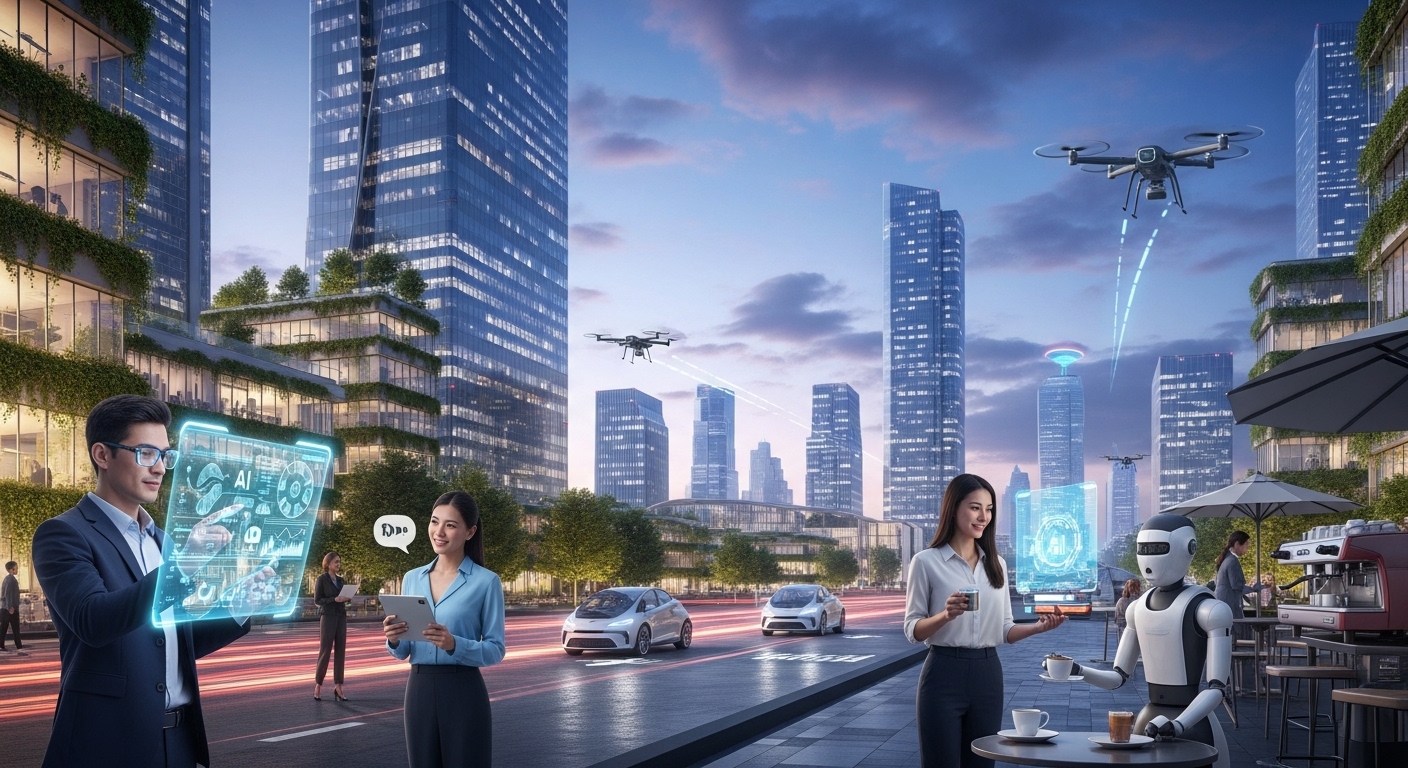
Artificial Intelligence is no longer a futuristic concept that belongs only in science fiction movies. In 2026, AI has become a major part of everyday life, transforming how people work, communicate, shop, learn, and even manage their homes. From smart assistants that understand human speech to advanced tools that automate complex tasks, artificial intelligence is reshaping the modern world faster than many people expected.
Businesses across industries are adopting AI to improve efficiency, while individuals are using it to simplify daily routines. As this technology continues to evolve, understanding how artificial intelligence is changing the way people work and live in 2026 is more important than ever.
The Growing Role of Artificial Intelligence in Daily Life
Artificial intelligence is now integrated into many devices and services people use every day. Smartphones can predict user behavior, recommend content, and provide personalized assistance. Smart home devices can adjust lighting, control temperatures, and improve security without requiring manual input.
Many households now rely on AI-powered systems for:
Smart Home Management
AI can automate routine home tasks such as:
- Adjusting room temperature automatically
- Monitoring home security cameras
- Managing electricity consumption
- Scheduling household appliances
- Voice-controlled entertainment systems
These systems make homes more convenient, energy efficient, and secure.
Personalized Digital Experiences
Streaming platforms, online stores, and social media apps use AI to understand user preferences. In 2026, recommendation systems have become more accurate than ever, showing people content and products that closely match their interests.
Examples include:
- Music recommendations based on mood
- Shopping suggestions based on browsing habits
- Personalized news feeds
- Custom learning paths for online education
This level of personalization saves time and improves user experience.
How AI Is Transforming the Workplace
One of the biggest impacts of artificial intelligence in 2026 can be seen in the workplace. Companies are using AI tools to increase productivity and reduce repetitive tasks.
Automation of Repetitive Tasks
Many routine tasks that once required hours of manual work are now handled by AI systems. Employees can focus more on creative and strategic work instead of repetitive processes.
AI can automate:
- Data entry
- Customer support responses
- Invoice processing
- Email sorting
- Scheduling meetings
This improves productivity while reducing human error.
AI as a Virtual Assistant
AI-powered workplace assistants can now:
- Summarize meetings
- Draft emails
- Generate reports
- Analyze spreadsheets
- Manage calendars
Professionals in marketing, finance, healthcare, and education are using AI to save time and improve decision-making.
Remote Work Enhancement
Remote work has become more efficient because AI tools help teams collaborate better. Virtual meeting software now includes features like:
- Real-time transcription
- Automatic translation
- Meeting summaries
- Noise cancellation
- Smart scheduling across time zones
These tools make global teamwork smoother than ever before.
Artificial Intelligence in Healthcare
Healthcare is another area where AI is making a major difference in 2026. Doctors and medical professionals now use AI to improve patient care and diagnosis.
Faster Disease Detection
AI can analyze medical images and patient records quickly, helping doctors identify diseases earlier.
AI supports:
- Cancer detection
- Heart disease prediction
- Drug interaction warnings
- Mental health monitoring
- Personalized treatment planning
Earlier diagnosis often leads to better outcomes for patients.
Virtual Health Monitoring
Wearable devices powered by AI can continuously monitor health data such as:
- Heart rate
- Blood pressure
- Sleep quality
- Blood sugar levels
- Activity levels
These devices can alert users and doctors when health problems may be developing.
AI in Education and Learning
Education has changed significantly with the help of artificial intelligence. In 2026, AI is making learning more personalized and accessible.
Personalized Learning Systems
AI can adapt lessons based on a student’s strengths and weaknesses. This helps learners progress at their own pace.
Benefits include:
- Customized lesson plans
- Instant feedback
- Language translation
- Interactive tutoring
- Better accessibility for students with disabilities
Students can now receive a more tailored educational experience.
Teachers Using AI Tools
Teachers also benefit from AI by reducing administrative tasks. AI can help educators:
- Grade assignments
- Track student performance
- Create lesson materials
- Identify struggling students early
- Improve classroom engagement
This allows teachers to spend more time focusing on students.
AI in Shopping and Consumer Behavior
Artificial intelligence is changing the way people shop both online and offline.
Smarter Online Shopping
Retailers now use AI to create highly personalized shopping experiences. Customers receive recommendations based on previous purchases, interests, and current trends.
AI improves shopping through:
- Virtual try-on technology
- Chatbots for customer support
- Price comparison tools
- Fraud prevention systems
- Inventory prediction
This creates faster and more convenient shopping experiences.
Cashier-Free Stores
Some stores now allow customers to enter, take products, and leave without standing in checkout lines. AI tracks purchases automatically and charges the customer digitally.
This innovation saves time and improves convenience.
Challenges of Artificial Intelligence in 2026
Despite its many advantages, artificial intelligence also raises important concerns.
Job Displacement Concerns
Some workers worry that AI may replace certain jobs, especially roles involving repetitive tasks. Industries such as manufacturing, customer service, and transportation are seeing significant automation.
However, AI is also creating new roles in:
- AI development
- Data analysis
- Cybersecurity
- Digital ethics
- Human-AI collaboration
The workforce is shifting rather than simply shrinking.
Privacy and Security Issues
As AI systems collect more personal data, privacy has become a major concern. Governments and companies are working to create stronger rules for responsible AI use.
Important concerns include:
- Data misuse
- Surveillance risks
- Biased algorithms
- Cybersecurity threats
- Lack of transparency
Balancing innovation with privacy remains a key challenge.
The Future of Human Life With AI
Artificial intelligence in 2026 is becoming a powerful partner in everyday life. Rather than replacing humans completely, AI is helping people become more productive, informed, and connected.
As technology continues to improve, people will likely see even more advanced AI systems in transportation, healthcare, education, and communication. The way people work and live is already changing, and artificial intelligence will continue shaping the future for years to come.
Understanding how artificial intelligence affects daily life can help individuals and businesses prepare for the opportunities and challenges that lie ahead.